
Getting a Second Opinion on Your Workers’ Comp Payout

A second opinion for workers’ comp benefits means something specific: an independent recalculation of your weekly disability payment, your permanent-partial disability award, and your settlement estimate, using your actual pay history and your state’s rules. It is not a medical second opinion about your injury. Insurers make math mistakes, apply the wrong cap, or lean on a low impairment rating, and a recalculation catches that.
Do this first:
- Pull your last 13 weeks of pay stubs before the injury.
- Find your state’s 2026 maximum weekly benefit.
- Run your numbers through the Free Workers’ Comp Calculator before you sign anything.
Key Takeaways
A workers’ comp second opinion is an independent recalculation of your weekly benefit, PPD award, and settlement value, and it frequently uncovers AWW errors, cap mistakes, or low impairment ratings that reduce what you’re owed.
| Point | Details |
|---|---|
| Verify your AWW first | Use all 13 weeks of pre-injury pay stubs and include overtime and bonuses in the total. |
| Check the state cap | Compare your calculated weekly benefit against your state’s current maximum before accepting any offer. |
| Separate settlement buckets | Keep remaining indemnity, PPD lump sum, and future medical buyout as three distinct figures, not one blended number. |
| Know your formal options | An IME, a change of physician, or a paid outside consult each carry different evidentiary weight and procedural risk. |
| Recalculate before you sign | Run your wage and injury details through the Free Workers’ Comp Calculator, which applies each state’s 2026 caps automatically. |
This article is general information, not a substitute for advice from a qualified financial advisor. Consult a qualified financial professional about your own circumstances before acting on anything here.
Table of Contents
- What a Workers’ Comp Second Opinion Actually Checks
- How Do I Verify My Own Workers’ Comp Numbers?
- Formal Ways to Get an Official Second Opinion
- Common Calculation Errors That Cost You Money
- When to Bring in a Workers’ Comp Attorney
- Run Your Numbers Before You Sign Anything
- Sources
- FAQ
What a Workers’ Comp Second Opinion Actually Checks
Four dollar figures drive every workers’ comp claim, and each one has its own failure point.
- Average weekly wage (AWW). States calculate this from the 13 weeks before your injury, and it has to include overtime, shift differentials, and regular bonuses. Leave those out and every downstream number shrinks.
- Weekly benefit formula. Most states pay roughly two-thirds of AWW (66.67% is the common rate), subject to a state maximum that changes every year. The cap, not the formula, is usually what decides your actual check.
- Permanent-partial disability (PPD). PPD awards use scheduled weeks (a fixed number tied to the body part injured) multiplied by your weekly benefit and your impairment rating. A shoulder might carry a different schedule than a knee, and some states also allow whole-person impairment claims outside the schedule.
Miss any one of these and the insurer’s number looks reasonable on paper while shortchanging you in practice.
How Do I Verify My Own Workers’ Comp Numbers?
You do not need a law degree to check this math. You need documents and about twenty minutes.
Start by gathering what you’ll need:
- Thirteen weeks of pay stubs from immediately before your injury, including overtime and bonus pay.
- Your employer’s wage report to the insurer, so you can compare it against your own stubs.
- Any impairment rating already issued, plus the exam report behind it.
- A payment history from the insurer showing what you’ve been paid so far.
Then work the math in order. First, average those 13 weeks into your AWW, making sure overtime is actually in the total. If your hours vary a lot, an overtime calculation guide helps confirm you’re counting it correctly. Second, apply your state’s replacement rate to that AWW. Third, check the result against your state’s minimum and maximum weekly benefit. Fourth, if you have a PPD rating, multiply your scheduled weeks by your weekly benefit by the rating percentage to get the lump sum.
The Free Workers’ Comp Calculator runs this same sequence automatically and pulls each state’s 2026 cap, so you can plug in your wage and injury type and see where your insurer’s offer lands against the ceiling. Save every pay stub, medical report, and piece of correspondence in one folder. You’ll need all of it if this goes to a hearing or a second opinion.
Pro Tip: Run the calculator twice: once with your raw AWW and once with overtime and bonuses added back in. The gap between those two numbers is often the exact amount your insurer shorted you.
Formal Ways to Get an Official Second Opinion
Checking your own math is step one. If the numbers don’t match what you’re being paid, three formal paths exist inside the claims system itself.
- Independent Medical Examination (IME). Insurers order these to get a rating from a doctor of their choosing, and the result carries real weight in negotiations and hearings. Show up prepared. An IME can move your impairment rating up or down.
- Change of physician. Many states let you request a new treating doctor, though the rules on timing and approval vary widely by jurisdiction.
- Out-of-pocket consult. You can pay a specialist directly for an opinion on your impairment rating. It costs money upfront, but the findings can sometimes be introduced as evidence at a hearing.
Each route affects your case differently, and insurers don’t always have to pay for a second opinion depending on your state and what’s already happened with prior exams or physician changes. Check your state workers’ compensation board rules before you request any of these, and talk to an attorney before taking a step that could affect your medical care or benefit checks. The wrong move at this stage can cost you access to a treating doctor you actually trust.
Common Calculation Errors That Cost You Money
Insurers rarely lie outright. They just apply the math loosely, and loose math tends to favor them.
- AWW shortcuts. Missing overtime, skipping bonuses, or using the wrong 13-week window all shrink your baseline. A worker who regularly clocks 10 hours of overtime a week can see their true AWW run hundreds of dollars higher than what a rushed calculation shows.
- Cap misapplication. Some adjusters apply the raw two-thirds formula without checking whether it exceeds the state maximum, either overpaying briefly or, more often, underpaying by applying the wrong year’s cap.
- Weak impairment ratings. A rushed exam, an incomplete review of your medical file, or use of an outdated AMA Guides edition can all produce a lower rating than your injury warrants. Even a 5 to 10 percent shift in your rating can move a PPD lump sum by thousands of dollars, since the rating multiplies straight through the scheduled weeks and weekly rate.
- Settlement blending. Watch for offers that quietly combine your PPD lump sum with a medical buyout, which makes future care costs disappear into a single number nobody scrutinizes.
When to Bring in a Workers’ Comp Attorney
Some situations call for a lawyer before you sign anything. If your recalculation shows a real gap between what the calculator produces and what’s on the table, if benefits have been denied outright, if the medical picture is contested, or if requesting a change could put your current treatment at risk, that’s your signal.
Before a consult, bring:
- Your calculator output showing the recalculated weekly and PPD figures.
- Thirteen weeks of pay stubs and any wage statements the insurer filed.
- Medical records, including any impairment rating reports.
- The insurer’s written offer or settlement proposal.
A workers’ comp appeal or formal dispute usually starts with an attorney filing paperwork, requesting an IME, and building a negotiating position from your documentation. Most take these cases on contingency, so the consult itself typically costs nothing.
What a Cap-Aware Recalculation Actually Reveals
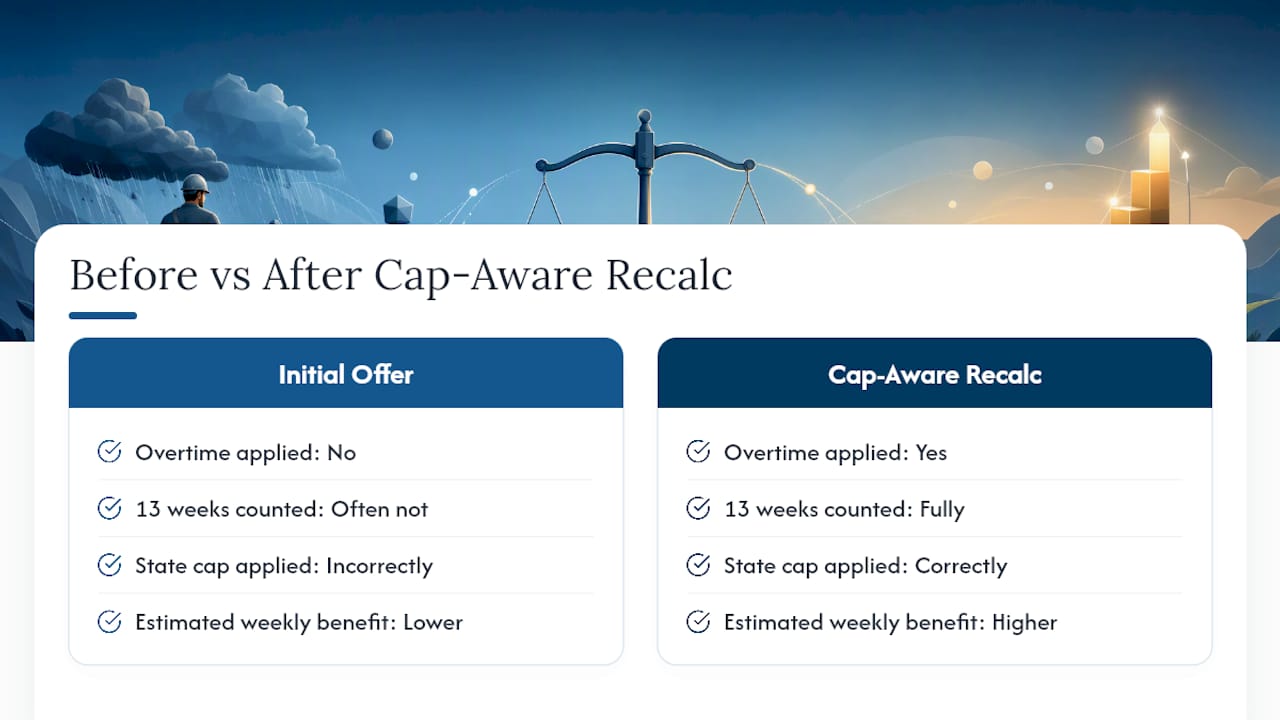
Running the Free Workers’ Comp Calculator, which applies each state’s 2026 weekly benefit caps, tends to surface the same pattern repeatedly: workers who assumed their offer was final find a gap once overtime and the correct cap get applied properly. One recalculation for a mid-wage worker with unrecorded overtime pushed the estimated weekly benefit up by a meaningful margin once the full 13 weeks of pay were counted correctly. That’s the value of running the numbers independently before you agree to anything.
Run Your Numbers Before You Sign Anything
You’ve got three real options for a second opinion on your workers’ comp numbers: check the math yourself, request a formal review inside the claims process, or pay for an outside opinion. Workerscompestimator gives you the fastest and cheapest starting point of the three, because it applies each state’s actual 2026 caps automatically instead of leaving you to look up a rate table and do the multiplication by hand.
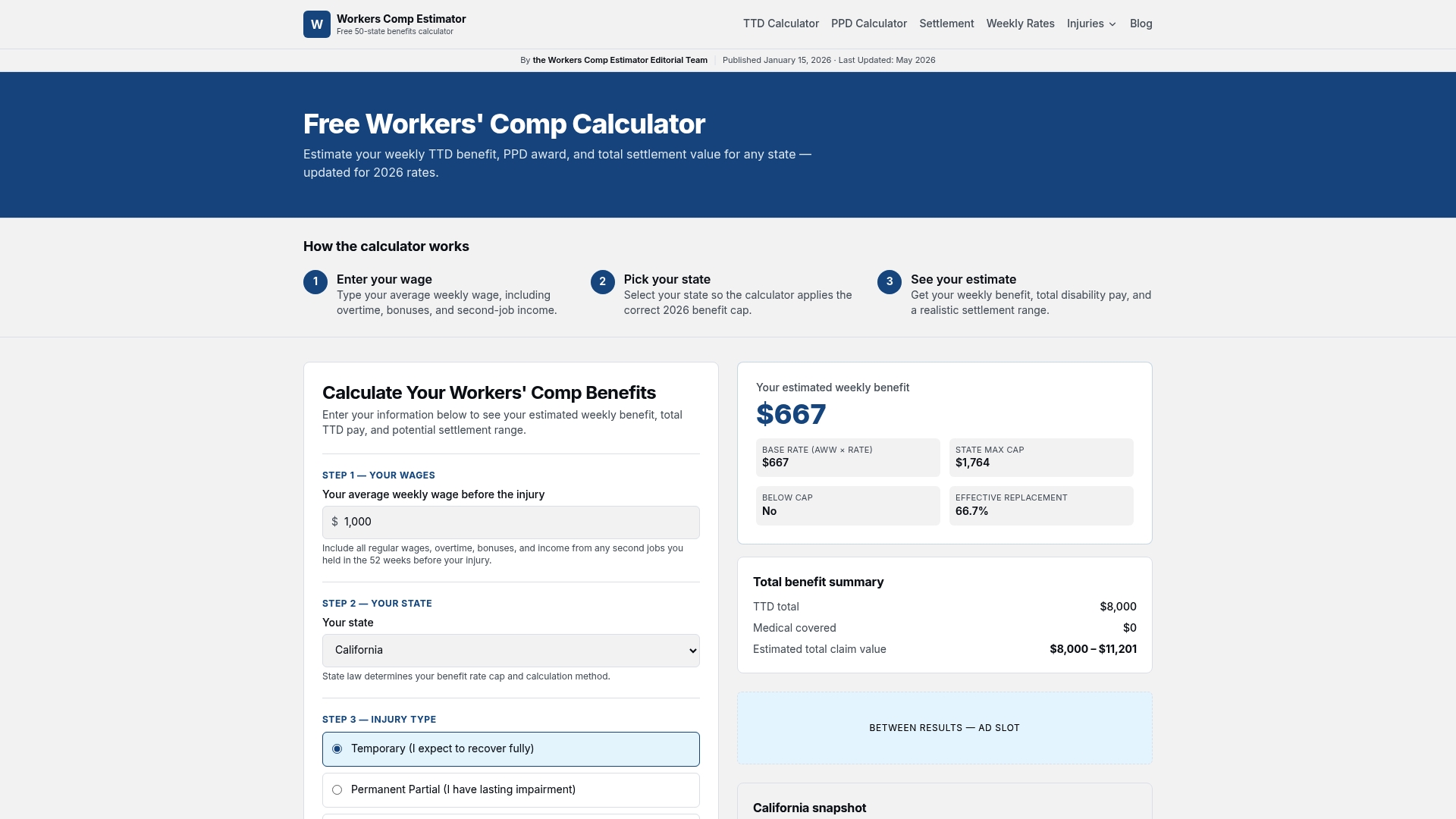
Enter your average weekly wage, your state, and your injury type into the Free Workers’ Comp Calculator, and you’ll get an estimated weekly benefit alongside a settlement range built from the same scheduled-weeks and impairment-rating math insurers use. If your injury involves a specific body part, the back injury, knee injury, or shoulder injury settlement calculators narrow the estimate further using scheduled-award figures for that injury type. Check the results against your state’s page, like the Massachusetts calculator or Oregon calculator, to confirm the cap being applied matches where you live.
Run the numbers before your IME, before you sign a settlement release, and before you decide whether to call an attorney. It takes less time than reading through your claims file.
Sources
- How Is Workers Comp Calculated? 2026 Formula Guide | ClaimCalc
- Texas Department of Insurance — Workers’ Compensation: Employee benefits
FAQ
What Does “Second Opinion” Mean for Workers’ Comp Benefits?
It means an independent recalculation of your weekly disability payment, PPD award, or settlement estimate, checking whether the insurer applied your wage history and state cap correctly.
How Do I Get a Second Opinion on My Workers’ Comp Calculation?
Gather 13 weeks of pay stubs, your impairment rating if you have one, and your state’s current cap, then run those figures through the Free Workers’ Comp Calculator or a similar cap-aware tool.

Can an Insurer Deny a Second Opinion Exam?
Yes. Insurers can refuse to pay for a second opinion depending on state rules and whether you’ve already used a change-of-physician request or IME.
How Long Does a Formal Second Opinion Take?
An IME or change-of-physician request typically takes a few weeks to schedule and complete, though timelines vary by state workers’ comp board and case backlog.
Does an Independent Calculator Replace a Doctor’s Exam?
No. A calculator recalculates your dollar figures using your wage and state cap data; it does not evaluate your medical condition or issue an impairment rating.
When Should I Hire a Workers’ Comp Attorney Instead of Doing This Myself?
Bring in an attorney when your recalculation shows a material gap versus the insurer’s offer, when benefits have been denied, or when a physician change could jeopardize your current treatment.
Recommended
More from the blog
Apportionment can cut your permanent disability award. Learn how states split benefits between work and pre-existing causes, and how to challenge the split.
Learn how Texas workers’ comp impairment ratings affect benefits, deadlines, and disputes, then use the payout calculator before accepting an offer.
Understand how an impairment rating impacts your workers' comp payout. Learn key steps to maximize your settlement before signing any documents.
Free workers' comp calculators
Put the numbers in this article to work on your own claim.
Weekly benefit, PPD, and settlement in one place.
What your weekly temporary disability check should be.
Scheduled weeks and permanent impairment awards.
Light-duty benefit when you earn less while healing.
Federal employee FECA award by body part.
Lump-sum value of your full claim.
Turn a 5%, 10%, or 20% rating into dollars.
Max and min weekly rates for all 50 states.
Typical settlement ranges by injury and state.
Average settlement for fusion, rotator cuff, knee replacement, and more.
Why comp does not pay it, and when a third-party claim does.
When carriers typically make an offer.
What coverage costs by class code and payroll.
Guides, state updates, and claim strategy.