
U.S. 2026 State Caps: Estimate Permanent Disability Workers’ Comp Pay

If your workplace injury has left you with a lasting impairment, you likely qualify for permanent disability workers comp once a doctor declares your condition permanent and stationary (P&S) or says you’ve reached maximum medical improvement (MMI). That single medical finding starts the clock: it triggers an impairment rating, which then converts into either a percentage-based payment schedule or a lump-sum settlement. Your first move should be requesting a written copy of that P&S report and checking your state’s payment deadlines.
TL;DR:
- The impairment rating used to determine benefits is based on medical evaluations from treating doctors and independent examiners, with adjustments for age, occupation, and pre-existing conditions.
- State caps on weekly disability payments can vary significantly in 2026, from just over $1,000 to nearly $1,900, greatly affecting total compensation for identical injuries.
- Disputes over ratings often stem from misunderstandings about apportionment and wage calculations; thorough documentation and early review of reports can prevent lost benefits.
- Settlement decisions, including lump sums or ongoing weekly payments, impact future medical coverage and eligibility for programs like Medicare and SSDI.
- Using state-specific calculators before negotiating helps injured workers establish realistic expectations, considering their injury, wages, and jurisdictional limits.
Table of Contents
- What Permanent Disability Means: P&S/MMI and PPD vs. PTD
- Who Qualifies, and When Do Permanent Benefits Start?
- How Are Permanent Disability Ratings Determined?
- How Payments Are Calculated
- What to Do If You Disagree With Your Rating or Denial
- Settlement Options: Lump Sum vs. Periodic Award
- Action Checklist: 8 Steps to Advance Your Claim
- Estimate Your Award Before You Negotiate
- Common Misconceptions Worth Correcting
- Run Your Numbers With the Free Workers’ Comp Calculator
- Sources
- FAQ
What Permanent Disability Means: P&S/MMI and PPD vs. PTD
Permanent and stationary (P&S) and maximum medical improvement (MMI) describe the same milestone in most states: your treating doctor decides your condition has plateaued and won’t improve further with more treatment. That report is the trigger for permanent disability benefits, separate from the temporary checks you received while healing.
Impairment and disability aren’t the same thing. Impairment is the medical loss of function; disability is the economic impact that loss has on your ability to work and earn. States handle the payout two ways:
- Scheduled awards pay a fixed number of weeks for specific body parts (a thumb, an eye, a leg).
- Unscheduled or whole-body awards use a percentage rating applied to the whole person, common for spine, brain, or psychiatric injuries.
Permanent total disability (PTD) usually applies to catastrophic losses, like loss of both hands, total blindness, or a severe brain injury, and some states apply automatic PTD presumptions for these.
Who Qualifies, and When Do Permanent Benefits Start?
Eligibility for permanent disability hinges on a few concrete facts, not guesswork. Run through this before assuming you’re covered:
- Your employer carries workers’ comp coverage and your injury happened on the job or arose from job duties.
- You filed your claim within your state’s deadline, which varies but often runs 30 to 90 days for notice and one to three years for the formal claim.
- You received authorized treatment through the workers’ comp system, not just an outside doctor visit.
- A doctor has declared you P&S or at MMI, which is the actual switch that turns temporary payments into permanent ones.
Payment timing trips people up constantly. In most states, permanent disability payments should start shortly after your temporary disability benefits end, once the insurer receives the rating. Delays happen when the claims administrator drags out scheduling the rating exam. Push back by requesting your P&S report directly and asking the claims administrator for a written payment schedule.
How Are Permanent Disability Ratings Determined?
Your rating doesn’t come from a single doctor’s gut feeling. It’s built from a chain of medical and legal steps, and each one can shift the final number.
- Treating physician issues the first impairment opinion in the P&S report.
- Independent Medical Exam (IME), or in some states a Qualified/Agreed Medical Evaluator (QME/AME), reviews or re-examines you if the insurer or your attorney disputes the initial rating.
- A formal rater (sometimes the state agency, sometimes a private evaluator) converts the medical findings into a percentage or scheduled weeks using either the AMA Guides to the Evaluation of Permanent Impairment or a state-specific body-part schedule.
Several factors move that number up or down. Your date of injury matters because rating formulas change over time. Age and occupation matter because some states apply adjustments based on how the impairment affects future earning capacity in your line of work. California, for example, applies a 1.4 multiplier to certain injury ratings before calculating the final award.
Apportionment is the factor that catches people off guard most. If a doctor attributes part of your impairment to a prior injury, arthritis, or a pre-existing condition, the insurer subtracts that percentage from your award, even if the current job aggravated the old problem into a worse state.
Pro Tip: Ask your treating doctor, in writing, to address apportionment directly in the P&S report. A vague report gives the insurer room to guess low on what’s “pre-existing.”
How Payments Are Calculated
Three numbers drive your check: your impairment rating, your average weekly wage before the injury, and your state’s formula or cap. Multiply your wage basis by a percentage (often close to two-thirds for total disability) or by a scheduled number of weeks tied to the body part involved.

Permanent total disability commonly pays a substantial portion of your average weekly wage, though every state caps that figure at a maximum dollar amount regardless of how high your wage was. Weekly caps for 2026 vary enormously by state, from just over $1,000 in states like Wyoming and Texas up to nearly $1,900 in Massachusetts and Connecticut. That spread alone can mean tens of thousands of dollars in difference between two workers with identical injuries in different states.
A few things to expect once the rating lands:
- Scheduled injuries (a finger, a foot) pay a set number of weeks at your compensation rate, independent of your actual wage loss.
- Whole-body impairments convert the percentage into weeks using your state’s formula, then multiply by your weekly rate.
- Late payments often trigger a statutory penalty, sometimes an automatic percentage increase on the overdue amount.
- Workers’ comp payments, including permanent disability, are generally not taxable under federal law, unlike Social Security Disability Insurance in some circumstances.
Run your own numbers against your state’s rate table before accepting any number the insurer offers first.
What to Do If You Disagree With Your Rating or Denial
Disagreeing with a rating doesn’t mean the process is over. It means you’re entering the next phase, and it has its own rules and clock.
- Request an independent evaluation. Depending on your state, this is an IME, a QME, or an AME. Insurers frequently request their own IME when they think the treating doctor rated too generously.
- File a formal appeal or objection within your state’s deadline, which can be as short as 20 to 30 days from the date you receive the rating or denial.
- Attend mediation if your state offers it before a hearing; many disputes settle here without a judge.
- Bring a lawyer in once apportionment, a denial, or a lowball rating is on the table. Attorneys tend to add the most value at exactly this stage, where medical evidence and legal argument intersect.
Document everything: appointment dates, every version of your P&S report, and any correspondence where the insurer changed its position.
Settlement Options: Lump Sum vs. Periodic Award
Most permanent disability cases eventually offer a choice: take a lump-sum settlement (often called a Compromise and Release, or C&R) or accept a stipulated award that pays out over time while keeping your medical benefits open.
- Lump sums close the case completely, including your right to future medical treatment for that injury in many states.
- Stipulated awards preserve ongoing medical coverage but pay weekly or biweekly instead of all at once.
- A lump sum can affect your Medicare set-aside obligations and interact with SSDI offset rules, so it’s not a decision to make on a napkin.
Pro Tip: Never sign a settlement before running the numbers through a settlement calculator and, ideally, before a lawyer reviews the release language. Some states require a judge’s approval before a settlement becomes final, which gives you one more checkpoint to catch a bad deal.
Action Checklist: 8 Steps to Advance Your Claim
Work through these in order, and keep copies of everything:
- Request the full P&S/MMI report in writing from your treating doctor.
- Save every medical record, not just the final report.
- Confirm your original claim filing date against your state’s statute of limitations.
- Ask the claims administrator for a written PD payment schedule.
- Request an IME or QME if your rating seems low or apportionment looks inflated.
- Document any modified job offer, wage changes, or refused accommodation.
- Run your case through a state-specific PPD calculator before any settlement talk.
- Consult an attorney before signing a C&R or accepting a denial.
Estimate Your Award Before You Negotiate
Guessing at a fair number is how injured workers leave money on the table. A Free Workers’ Comp Calculator takes your average weekly wage, state, and injury type, then applies your state’s 2026 caps to produce a realistic weekly benefit or settlement range, including tools built specifically for PPD awards and common injuries like back injuries. Bring that estimate, alongside your P&S report and wage stubs, into any conversation with an adjuster or attorney.
Common Misconceptions Worth Correcting
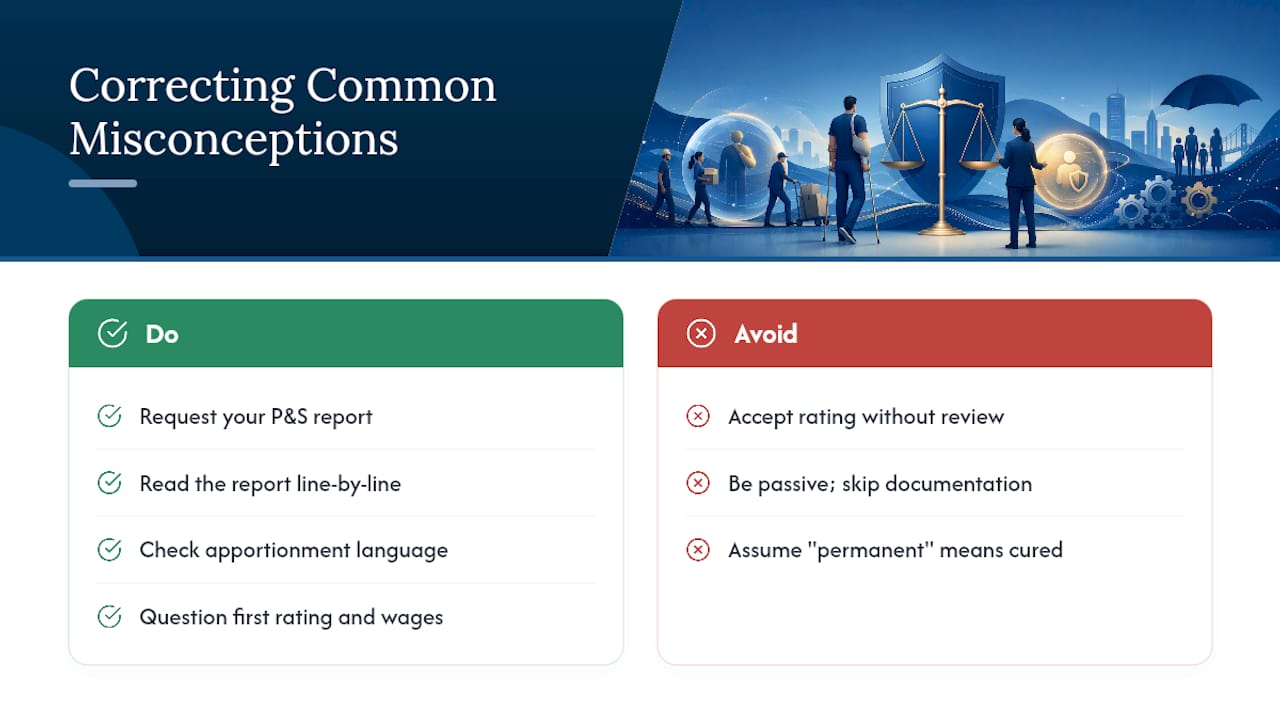
P&S doesn’t mean cured. It means your condition has stopped changing, for better or worse, and that distinction confuses a lot of injured workers who expect a diagnosis of “permanent” to come with more explanation than they get. The single highest-value thing you can do early is request your own copy of the P&S report and read it line by line, especially the apportionment language, before the insurer’s rater runs with it.
I’d argue most disputes trace back to workers accepting the first rating without questioning apportionment or wage calculations, not to insurers acting in bad faith. The system rewards documentation and questions, not passivity.
— Daniel
Run Your Numbers With the Free Workers’ Comp Calculator
Workerscompestimator gives you the same state-specific 2026 rate caps that adjusters use, so you walk into a settlement conversation with a number, not a guess. Start with the PPD calculator if you have a scheduled or whole-body impairment rating, or check your state’s maximum weekly rate directly, whether that’s the Ohio calculator, the California calculator, or the Oregon calculator.
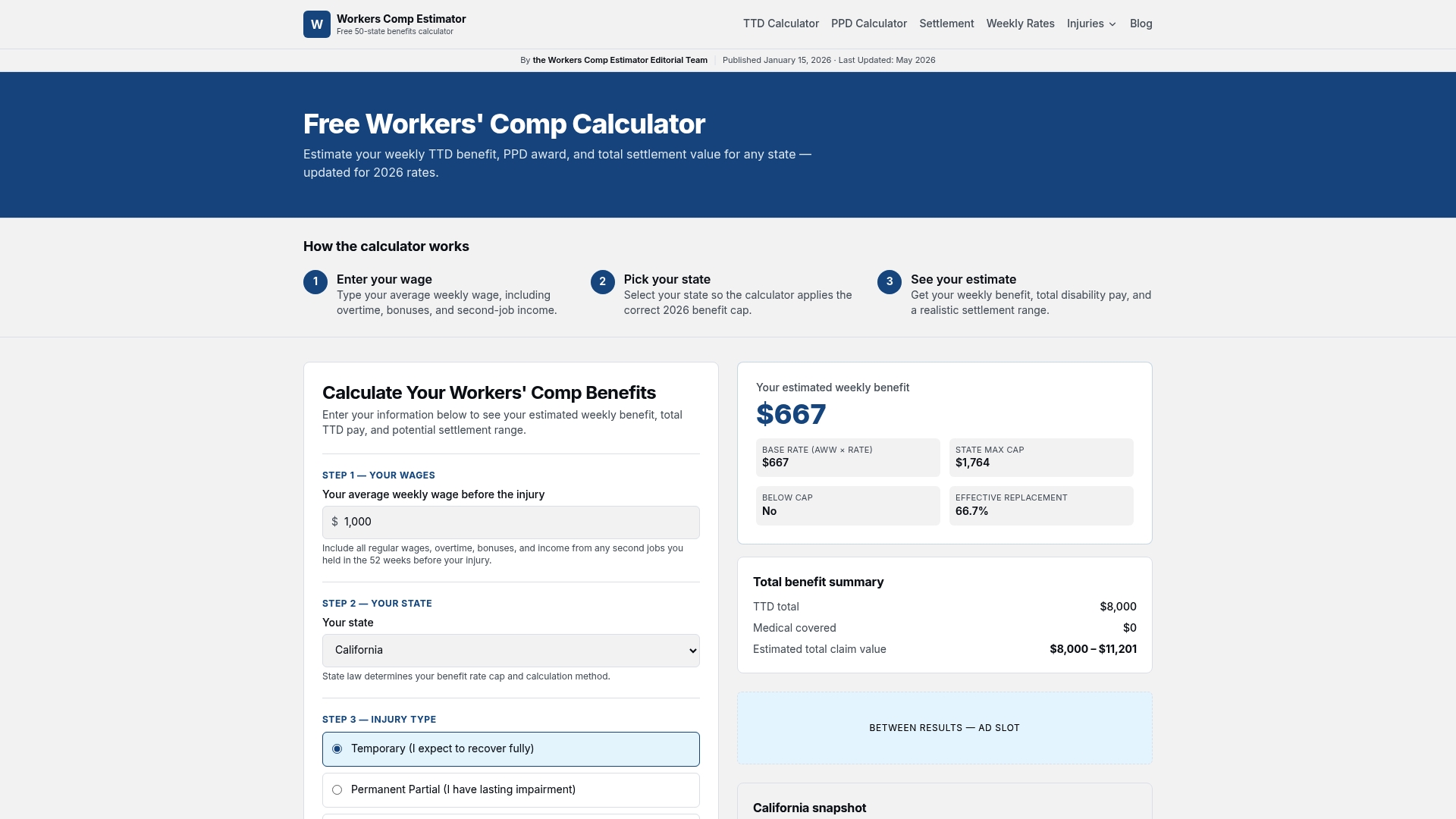
Every state calculator on the site pulls its own 2026 caps and formulas, so the estimate you get reflects your actual jurisdiction rather than a national average that doesn’t apply to your check. Run your wage, injury type, and state through the free 50-state estimator before you respond to any settlement offer.
Sources
Confirm anything in this guide against primary sources before relying on it for your specific claim:
- Workers’ Compensation: Permanent Disability Benefits — Legal Aid at Work
- Workers’ Compensation in California — Injured Worker Guidebook (DWC/California DIR)
- Permanent Disability Benefits: Are You Eligible? — Nolo
This article is general information, not a substitute for advice from a qualified financial advisor. Consult a qualified financial professional about your own circumstances before acting on anything here.
FAQ
How Do You Get Permanent Disability From Workers’ Comp?
You qualify once a treating doctor declares your condition permanent and stationary or says you’ve hit maximum medical improvement, which triggers an impairment rating that converts into either scheduled payments or a whole-body percentage award.
How Much Is the Total Permanent Disability Payout?
Permanent total disability commonly pays a substantial portion of your average weekly wage, but every state caps that amount, and 2026 weekly maximums vary significantly by state, with considerable differences in the allowable caps.
What Conditions Qualify You for Permanent Disability?
Any work-related injury that leaves lasting impairment after treatment can qualify, from scheduled losses like a finger or eye to whole-body impairments affecting the spine, brain, or major organs; some catastrophic losses trigger automatic PTD presumptions.
What Does Permanent Disability Pay Per Month?
Monthly pay depends on your weekly rate multiplied by the number of weeks in a month, which varies by your wage, impairment rating, and state cap; running your specifics through a state-specific calculator gives a far more accurate figure than any national average.
Recommended
More from the blog
See how 2026 state caps, wages, and surgery affect your U.S. hernia workers' comp payout. Run a free 50 state calculator for a realistic estimate.
Use the free 50-state estimator that applies 2026 state caps to estimate your workers' comp lump sum. Run your numbers, check SSDI/Medicare impact, and...
Run a state specific 2026 workers' comp settlement calculation. Use the free 50 state calculator to see how state caps change your payout.
Free workers' comp calculators
Put the numbers in this article to work on your own claim.
Weekly benefit, PPD, and settlement in one place.
What your weekly temporary disability check should be.
Scheduled weeks and permanent impairment awards.
Light-duty benefit when you earn less while healing.
Federal employee FECA award by body part.
Lump-sum value of your full claim.
Turn a 5%, 10%, or 20% rating into dollars.
Max and min weekly rates for all 50 states.
Typical settlement ranges by injury and state.
Average settlement for fusion, rotator cuff, knee replacement, and more.
Why comp does not pay it, and when a third-party claim does.
When carriers typically make an offer.
What coverage costs by class code and payroll.
Guides, state updates, and claim strategy.